India has strongly rejected remarks by the Organisation of Islamic Cooperation on New Delhi’s actions against terrorist infrastructure in Pakistan and Pakistan-occupied Jammu and Kashmir.
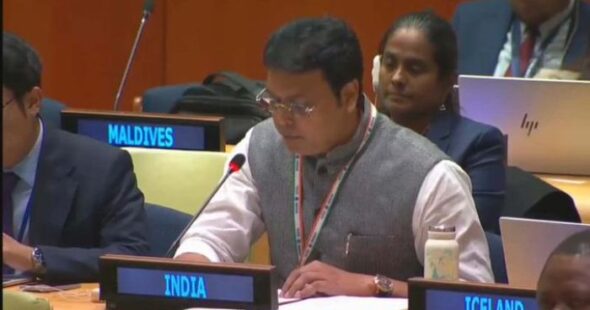
Speaking at the United Nations General Assembly‘s Sixth Committee, Bharatiya Janata Party Member of Parliament Biplab Kumar Deb stated that the OIC was failing to distinguish between perpetrators of terrorism and nations facing its consequences. He emphasized that India possesses the full right to protect its citizens from cross-border terrorism.
Deb delivered the national statement during the 81st UN General Assembly session focusing on measures to eliminate international terrorism as part of a 15-member Indian parliamentary delegation on a familiarisation visit.
Key Points Of The UN General Assembly Statement
- India rejected OIC remarks concerning New Delhi’s counter-terrorism actions in Pakistan and Pakistan-occupied Jammu and Kashmir.
- BJP MP Biplab Kumar Deb stated that the OIC fails to differentiate between terror perpetrators and victims.
- India invoked the April 2025 Pahalgam terror attack, which claimed 26 lives, to highlight the human toll of cross-border terrorism.
- New Delhi objected to references to Jammu and Kashmir in the OIC statement, pointing instead to rights violations in Pakistan-occupied Jammu and Kashmir.
Invocation Of The Pahalgam Attack
Addressing the international forum, Biplab Kumar Deb noted that India’s counter-terrorism stance is shaped by decades of experience dealing with attacks originating from its western neighbor. He categorized terrorism as a persistent threat to global peace, economic growth, democratic institutions, and human rights.
To demonstrate the severe human cost of cross-border violence, Deb cited the April 2025 Pahalgam terror attack, which resulted in 26 deaths. The incident was claimed by The Resistance Front, described as a proxy of the Pakistan-based Lashkar-e-Taiba.
Asserting that terrorism cannot be classified into categories of good or bad, the Indian representative argued that the deliberate targeting of civilians constitutes a serious international crime requiring universal condemnation.
Defense Of Military Actions And Rejection Of OIC Kashmir Reference
Defending India’s military response following the Pahalgam attack, Biplab Kumar Deb maintained that operations targeted specific terrorist infrastructure used to plan and direct assaults against India. He urged the international community to establish stronger mechanisms to hold accountable not only active terrorists but also organizers, financiers, and state sponsors of terror.
Furthermore, India formally objected to the OIC statement referencing Jammu and Kashmir. The statement on behalf of the OIC had been delivered by Saudi Arabia at the Sixth Committee, which handles international legal issues.
In response, the Indian delegation accused Pakistan of the illegal occupation of parts of Jammu and Kashmir, drawing attention to ongoing protests, unrest, and human rights violations reported within Pakistan-occupied Jammu and Kashmir.
Frequently Asked Questions
What did India say about the Organisation of Islamic Cooperation at the UN?
India rejected the OIC’s remarks regarding New Delhi’s actions against terrorist infrastructure in Pakistan and Pakistan-occupied Jammu and Kashmir, stating that the bloc fails to distinguish between those responsible for terrorism and the countries facing its consequences.
Which specific incident did India invoke during the UN General Assembly session?
India referred to the April 2025 Pahalgam terror attack, in which 26 people were killed, pointing to the incident as evidence of the severe human cost caused by cross-border terrorism originating from across its western border.
Stay Updated with the Latest News and Current Affairs
Discover more from Current Affairs World
Subscribe to get the latest posts sent to your email.