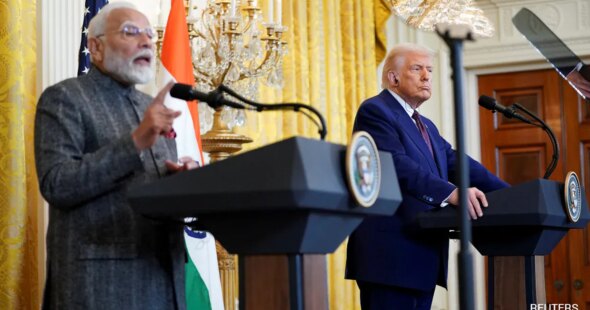
A proposed US tariff on India announced by the Office of the United States Trade Representative (USTR) would expose most new textiles and clothing while exempting smartphones, specified pharmaceuticals, and national-security goods.
The proposed duties of up to 25 per cent follow consultations with India on May 14 that failed to resolve American concerns regarding manufacturing policies. The proposed tariff ceiling for New Delhi is higher than the 18 per cent proposed for nations such as Bangladesh, Cambodia, Indonesia, Malaysia, and Thailand, but lower than Vietnam’s proposed ceiling of 35 per cent.
USTR stated that the proposed duties remain a policy proposal and have not yet taken effect. The agency also noted that it would consider a reduced rate of 17 per cent if India reaches a reciprocal trade agreement addressing the investigation’s findings.
Key Points Of The US Tariff On India
- Smartphones under tariff code 8517.13.00 are included in the annex of exempt items without narrow end-use restrictions.
- Patented pharmaceuticals, semiconductors, listed steel, aluminium, copper, vehicles, and wood products are excluded under Section 232 national-security rules.
- Most new fabrics and garments remain within the scope of the proposed tariff, while worn clothing is listed for exemption.
- USTR is seeking comments on creating an arrangement for a specified volume of textile and apparel imports to enter at a reduced Section 301 rate.
Exemptions And Excluded Products
The proposed exclusions cover listed steel, aluminium, and copper products, vehicles and vehicle parts, wood products, patented pharmaceuticals, and semiconductors currently subject to tariffs under Section 232, which is the US law governing national-security trade restrictions. While those exclusions apply to the new tariff proposal, they do not remove existing duties imposed under other measures.
A separate annex lists additional exempted products, including numerous pharmaceutical products such as medicines prepared in measured doses or packaged for retail sale. According to the USTR, the annex includes raw materials whose taxation could create domestic shortages, products whose inclusion could disrupt the wider economy, and goods that cannot be produced in sufficient quantities in the United States or obtained from other sources.
Books and other informational materials, donations, accompanied baggage, and certain agglomerated iron ores and concentrates are also proposed for exemption. Ordinary textile and apparel categories would largely remain within the scope of the proposed tariff, although worn clothing is listed in the annex.
Considerations For Textiles And Trade Discussions
USTR is seeking comments on whether to create an arrangement allowing a specified volume of textile and apparel imports to enter at a reduced Section 301 tariff rate. The agency also asks whether duties on those products should take account of any textile arrangement established under a separate investigation into countries’ restrictions on imports made with forced labour.
Those questions leave open the possibility of relief for some shipments, but do not establish such relief. The notice also sets out India’s defence of its manufacturing policies submitted during the investigation.
New Delhi Defence Of Manufacturing Policies
<p
Discover more from Current Affairs World
Subscribe to get the latest posts sent to your email.