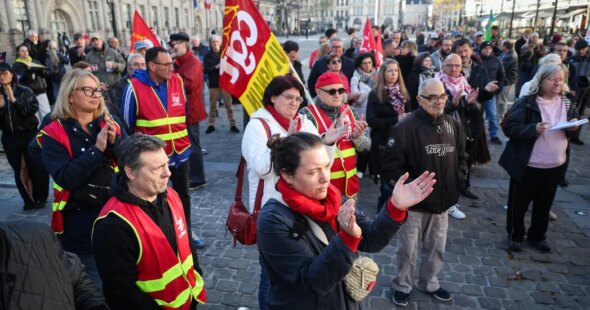
Protests in France have turned violent as thousands clash with police over living conditions, fuel prices, and school reforms, with the nationwide unrest now entering its second month. Authorities have arrested thousands of people across the country, while politicians remain divided on how to respond to the mounting crisis.
The demonstrations began as a series of student protests at high schools in suburban Paris last September, initially focusing on inadequate resources, crumbling infrastructure, overcrowded classrooms, and workloads. The movement quickly expanded from a Parisian suburb into a nationwide mobilization, drawing in university students, labor unions, parents, and other activists.
As the weeks progressed, the protests escalated and were joined by rioters and looters who used the unrest as a smoke screen for vandalism and arson. According to the French Interior Ministry, security forces and participants have sustained hundreds of injuries, thousands of arrests have been recorded, and public buildings have been targeted across various cities.
Key Points Of The Protests In France
- Nationwide unrest began last month with student demonstrations at high schools in suburban Paris over living conditions and school reforms.
- The Interior Ministry reported that protests had spread to more than 1,000 schools across France by early October.
- The movement broadened to include labor unions and parents, drawing between 500,000 and 800,000 marchers on October 17.
- Authorities have detained thousands of individuals, with police reporting extensive vandalism, car burnings, and clashes.
How The Unrest Started In Parisian Suburbs
The nationwide demonstrations trace back to mid-September, when students at a high school in the working-class Parisian suburb of Créteil staged a protest over inadequate resources and high workloads. Within days, students in the capital’s poorest suburbs began blocking school entrances to protest crumbling infrastructure, overcrowded classrooms, and flaws in the higher education admissions system.
By September 29, rally organizers stated that the unrest had spread to around 400 schools. The union of high school students noted that the blockades were organized to oppose a lack of teachers and staff, dilapidated facilities, and overcrowded schedules. Students barricaded entrances with items such as e-bikes, while some threw projectiles and set fire to trash cans.
The French education minister, Édouard Geffray, stated that some student demands were legitimate but condemned the confrontational nature of the protests. He noted that students had chased teachers and targeted school principals with firework-launching tubes. By the end of September, nearly 80 people had been injured and more than 440 individuals, including many minors, had been detained by authorities.
University Students And Labor Unions Join The Movement
The protests expanded significantly in October as university students joined the movement and demonstrations spread to more than 1,000 schools across France, including 220 that were blockaded. Authorities reported that the demonstrations were mutating from educational grievances into dangerous activities, accusing individuals of shooting mortar-style fireworks, burning public buildings, and looting.
By October 2, nearly 400 police officers and over 230 school employees and students had been injured, while the number of arrests climbed to 3,000. The movement broadened further in October to encompass labor unions, parents, and other activists as various grievances converged. On October 6, approximately 256,000 people marched through Paris and 40 other French cities, according to the Interior Ministry, while a student union estimated that protesters had occupied around 1,800 high schools.
Although most marches were peaceful, fires were ignited in cities like Lyon, and police officers used tear gas, including in Paris. A major union of French judges and prosecutors, alongside a human rights group, accused the police of using disproportionate force against individuals as young as 14. Subsequent demonstrations on October 8 and October 13 drew tens of thousands of participants across the country.
Largest Demonstrations And Clashes With Police
The largest day of protest since the movement began occurred on October 17, when official estimates indicated that more than half a million people joined 110 antigovernment marches throughout France. The C.G.T., a major labor union, placed the attendance figure even higher at 800,000.
While many marchers remained peaceful, rioters vandalized approximately 1,500 shops nationwide. In Paris, where more than 100,000 people marched peacefully, a few hundred rioters faced off against officers, burning cars and smashing storefronts. In the central town of Limoges, rioters set fire to the 19th-century City Hall, causing the building’s spire to collapse in flames.
Stay Updated with the Latest News and Current Affairs
Discover more from Current Affairs World
Subscribe to get the latest posts sent to your email.