
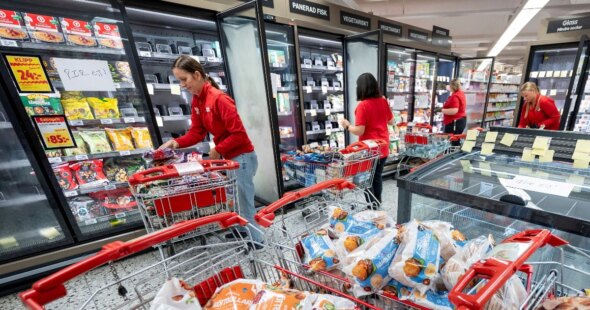
A widespread cyberattack targets European supermarket fridges across several countries, disrupting refrigeration units and forcing major grocery chains to discard large amounts of spoiled food. The incident, which occurred overnight on Monday, affected supermarket groups in Sweden, Belgium, Luxembourg, and Ireland, echoing a similar security breach that struck French retail stores last month.
The malicious intrusion raised temperatures in refrigerator and freezer units at dozens of stores, hitting prominent companies including Ahold Delhaize and Colruyt in Belgium and Luxembourg, alongside Swedish grocers ICA and Coop. Furniture retailer IKEA also confirmed that at least one of its stores suffered disruptions to its cooling systems.
“Everything is destroyed,” Engla Ingwall, sales manager at an ICA franchise store in Stockholm, told Reuters during a visit to the store on Monday, adding that the attack took place at 2 am local time but went unnoticed for hours. “There has been a cyberattack and all our freezers reached 50 degrees (Celsius).”
Key Points Of The Cyberattack Targets European Supermarket Fridges
- Refrigeration and freezer systems were targeted across Sweden, Belgium, Luxembourg, and Ireland during an overnight breach.
- Affected supermarket operators include Ahold Delhaize, Colruyt, ICA, Coop, IKEA, Musgrave, and Carrefour.
- Freezer units reached temperatures as high as 50 degrees Celsius, destroying large quantities of chilled and frozen goods.
- European authorities and cybersecurity experts highlighted the growing vulnerability of connected building management systems and the potential use of artificial intelligence in cyberattacks.
Which Supermarket Groups And Stores Were Affected
The latest security breach impacted multiple international retail brands and independent franchises, causing severe inventory losses. A spokesperson for privately held ICA stated that a limited number of its stores experienced overnight disruptions to their refrigeration and freezer systems.
In Ireland, wholesale company Musgrave reported that systems in 13 of its SuperValu stores were compromised, requiring the removal of chilled and frozen products from sale. Meanwhile, the Colruyt Group, which manages Spar stores in Belgium through a franchise network, confirmed that five of its shops had their fridge systems attacked.
French supermarket giant Carrefour, which faced severe disruptions during a similar incident last month, reported that 15 of its 700 stores in Belgium were affected. Swedish retailer Coop noted that 7 out of its 800 stores experienced unauthorized tampering with their refrigeration systems.
Growing Concerns Over Hybrid Threats And Vulnerable Infrastructure
European authorities have expressed rising alarm over hybrid threats targeting critical civilian infrastructure amid heightened security tensions following Russia’s 2022 invasion of Ukraine. While no group has claimed responsibility for the latest incidents, investigators are working to determine the origin of the breaches.
“It is not known who is behind this attack, and it may never be determined,” said Katrien Eggers, spokesperson for Belgium’s Centre for Cybersecurity, pointing to increasing risks driven by artificial intelligence. “All IT systems are potentially vulnerable, and AI can now be used to successfully exploit these weaknesses — especially by sophisticated actors.”
European Commission agriculture commissioner Christophe Hansen emphasized the gravity of the situation. “They are a deliberate attempt to disrupt our food supply chain and undermine consumers’ confidence in it – a warning that we must take seriously,” he said, describing the repeated security breaches as deeply concerning.
How Cybercriminals Target Modern Retail Systems
Modern retail infrastructure relies heavily on connected technologies, ranging from refrigerators and heating systems to security cameras and alarms, which can be monitored and controlled remotely. At least some of the compromised cooling units utilized temperature control technology developed by Danish manufacturer Danfoss, which was also targeted during the previous attack in France. Danfoss stated it has been collaborating with customers to implement security fixes.
Tom Hegel, a researcher at cybersecurity firm SentinelOne, explained that such operations typically align with extortion, political motivations, or nation-state sabotage. “Retail is an easy target because retail chains run enormous estates of refrigeration controllers, building management systems, door access panels and point-of-sale gear,” he said, noting that hackers leaving almost no digital traces make attribution extremely difficult.
The financial impact on individual businesses has been immediate and severe. Luc De Laet, founder and owner of Belgian butchery chain De Laet & Van Haver, reported that remote tampering caused his store’s refrigerators to reach 18 degrees Celsius, ruining approximately €15,000 ($16,800) worth of meat.
Frequently Asked Questions
What caused the cyberattack on European supermarkets?
The cyberattack on European supermarkets involved unauthorized remote tampering with refrigeration and freezer systems, causing internal temperatures to rise drastically and spoil food stocks across multiple countries.
Which companies and countries were affected by the breach?
The breach affected grocery stores and retailers in Sweden, Belgium, Luxembourg, and Ireland, with prominent companies such as ICA, Coop, Ahold Delhaize, Colruyt, IKEA, Musgrave, and Carrefour reporting disruptions.
Stay Updated with the Latest News and Current Affairs
Discover more from Current Affairs World
Subscribe to get the latest posts sent to your email.