Daily Current Affairs 02-JULY-2026 – MCQs, News & Analysis for UPSC, SSC & Banking Exams
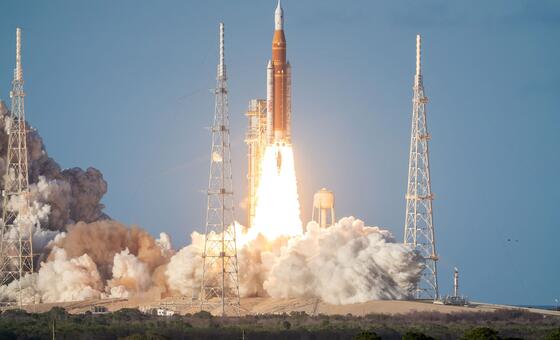
1. Indian Space Research Organisation (ISRO) recently announced the development of which advanced cryogenic propellant system for heavy-lift launch vehicles?
A) Cryogenic Propellant 1.0
B) Cryogenic Propellant 2.0
C) Cryogenic Propellant 3.0
D) Cryogenic Propellant Alpha
Correct answer: C) Cryogenic Propellant 3.0
Notes: ISRO’s Propulsion Complex at Mahendragiri has introduced ‘Cryogenic Propellant 3.0’. This latest innovation is set to power India’s next generation heavy-lift launch vehicles, marking a significant stride in space exploration capabilities. Cryogenic engines, using liquid hydrogen and liquid oxygen at extremely low temperatures, are crucial for lifting heavier payloads into orbit. This development builds upon years of research and earlier iterations. Furthermore, it bolsters India’s self-reliance in space technology and reduces dependence on foreign components. Consequently, this scientific breakthrough is crucial for UPSC current affairs, GK quiz, and science & technology sections, highlighting national achievements and advancements in space engineering.
2. Which country recently signed a significant long-term agreement with India for the development and operation of the strategic Chabahar Port?
A) Pakistan
B) Afghanistan
C) Iran
D) Oman
Correct answer: C) Iran
Notes: India and Iran have formalized a crucial long-term agreement regarding the Chabahar Port. This deal ensures sustained Indian involvement in the port’s development and operational management. The Chabahar Port is strategically vital for India, providing an alternative trade route to Afghanistan and Central Asia, thereby bypassing Pakistan. Its development has faced various geopolitical hurdles and sanctions over the years. This agreement strengthens India’s connectivity initiatives and its presence in the Arabian Sea, enhancing regional trade and counterbalancing other powers’ influence. Therefore, it is essential for UPSC current affairs, international relations analysis, and understanding India’s foreign policy and strategic investments. This latest news analysis is key for exam preparation on India’s diplomatic engagements.
3. The Union Cabinet recently approved the ‘National Blue Carbon Policy 2026’ primarily aimed at which environmental objective?
A) Promoting renewable energy in coastal zones
B) Enhancing coastal ecosystem protection and carbon sequestration
C) Developing deep-sea mining technologies
D) Regulating plastic waste in marine environments
Correct answer: B) Enhancing coastal ecosystem protection and carbon sequestration
Notes: India’s Union Cabinet has given its nod to the ‘National Blue Carbon Policy 2026’. This new policy focuses on safeguarding and expanding vital coastal ecosystems like mangroves, salt marshes, and seagrass beds. Blue carbon ecosystems are incredibly efficient at absorbing and storing carbon dioxide, playing a critical role in mitigating climate change. This policy therefore seeks to integrate these natural solutions into India’s comprehensive climate action framework. Furthermore, it demonstrates India’s commitment to climate resilience and biodiversity conservation, aligning with global environmental goals. This is a vital topic for UPSC current affairs, environment & ecology sections, and government policy updates. Understanding blue carbon’s significance is crucial for comprehensive exam preparation and GK quizzes on climate change.
4. The Reserve Bank of India (RBI) recently issued new guidelines for which financial system to facilitate international trade and digital transactions?
A) National Electronic Funds Transfer (NEFT)
B) Real-Time Gross Settlement (RTGS)
C) Cross-Border Digital Payments Systems
D) Unified Payments Interface (UPI) Lite
Correct answer: C) Cross-Border Digital Payments Systems
Notes: The Reserve Bank of India (RBI) has unveiled new guidelines specifically for ‘Cross-Border Digital Payments Systems’. This strategic move aims to streamline and significantly boost international trade and remittances using digital financial infrastructure. As global economies increasingly digitize, facilitating secure and efficient cross-border digital transactions becomes paramount for economic stability. These new regulations address critical issues like interoperability, security, and compliance for Indian entities involved in global trade. Consequently, this policy enhances India’s position in the global digital economy, promoting economic growth and ease of doing business. It is a critical government policy update. This development is essential for UPSC current affairs, banking exams, and economy updates. Candidates should understand the economic impact and regulatory framework surrounding digital finance for thorough exam preparation.
5. India recently conducted the maiden flight test of which indigenously developed stealth cruise missile from the Odisha coast?
A) Prithvi-V
B) Agni-VI
C) Nirbhay-II
D) Akash-NG
Correct answer: C) Nirbhay-II
Notes: India achieved a significant milestone with the maiden flight test of its indigenously developed ‘Nirbhay-II’ stealth cruise missile. The successful test, conducted from the Odisha coast, validates its advanced capabilities and readiness. Nirbhay-II is an upgrade to the existing Nirbhay missile, incorporating enhanced stealth features, an extended range, and improved precision guidance systems. This missile forms a crucial part of India’s conventional deterrence strategy and strengthens its defense arsenal. Furthermore, this successful test underscores India’s growing self-reliance in advanced defence technology and strengthens its strategic autonomy. This development is highly important for UPSC current affairs, defence & security updates, and general knowledge quizzes. Understanding such technological advancements is vital for comprehensive exam preparation focusing on national capabilities.